• Skip to primary navigation
  • Skip to main content
logo-yourlink
logo-edelman
logo-yourlink
logo-edelman
  • Who we are
    • About us
    • Vision
    • Team
  • What we do
    • Industries
    • Expertise
    • Clients
  • Special Projects
    • Community Links
    • Links Share
    • Links4Reputation
  • News
  • TRUST BAROMETER
  • Links in Media

Diana Nahorniac

Supporting Europe for Creators

Via Europe for Creators

Via Europe for Creators

Links Associates was engaged as part of a major European effort to implement the communication and government relations strategy of the European Author’s Societies (GESAC) for Romania. The campaign was designed to convince members of the EU Parliament and the public opinion of the need to reform the copyright laws. The key point of the campaign was identifying influencers that would promote the message. Our team worked with people from diverse backgrounds – artists, IT specialists, journalists – visible and followed in the mainstream media, online and offline. Together we spread the message on TV, on radio, in the newspapers and on social media. The final vote held on September 12th, 2018 was a testament to the successful nature of this campaign.
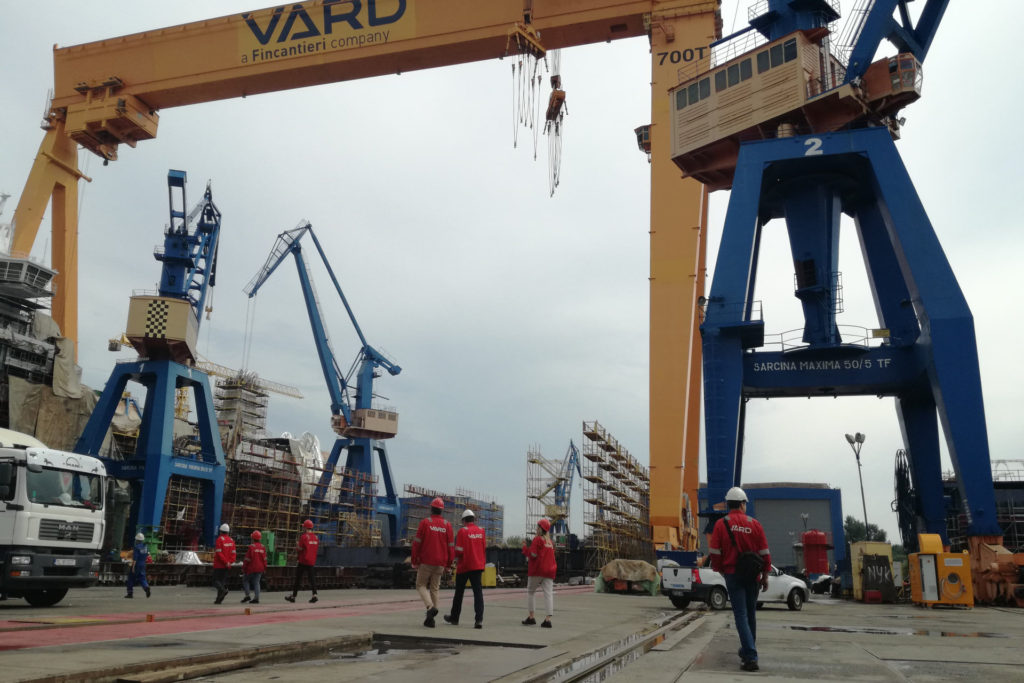
Telling Fincantieri’s story in Romania

You have to see in order to believe. To see what it means to build a ship ready for a memorable cruise or a ship ready to defend us when needed. That’s why we went to visit Fincantieri’s shipyards in Italy and, of course, in Romania – in Braila and Tulcea.

Four shipyards, four great experiences for a group of journalists interested and curious to see “how is made”. In Italy they were speechless when arriving right under the hull of a frigate that was under construction in Riva Trigoso shipyard. In Muggiano shipyard, we witnessed together the launching ceremony of the LSS Vulcano, an impressive military ship built for the Italian Navy.

In Romania, we were proud to see two shipyards working at full capacity. Fincantieri owns Vard Tulcea and Vard Braila where various kinds of vessels are built, cruise and expedition ships included.

We looked astonished how the Goliath crane can move around huge ship sections – carefully and with maximum precision. This crane is the giant of the yard keeping an eye on everything and everybody. The name says it all: it’s Goliath!

Fincantieri-1
Fincantieri-2
Fincantieri-3

Every smile counts!

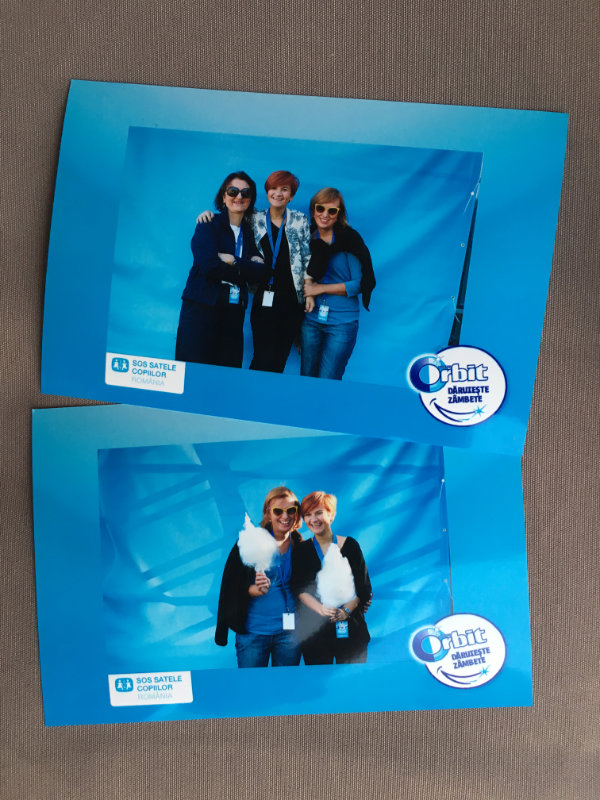
There’s no argue that smiling is an important part of our everyday life and that it has the magnificent power to instantly generate more positive emotions around us. That’s why we often feel happier around children - because they smile a lot. But children’s smile is also the most vulnerable. Orbit understood the importance of smiles for a happy childhood and decided to make the kids smile more.

So this year we helped Orbit to help the children from SOS Children’s Village Romania. A healthy smile is the first important step to self-confidence. This was the message we spread around together with Orbit.

Orbit-v3
Smile Back Orbit-v2

Brands take a stand

Edelman-v3

Today more than ever, consumers are putting their faith in brands to stand for something, to do the right thing, to help solve societal and political problems. Whether people are shopping for soap or shoes, they’re weighing a brand’s principles as much as its products. Opting out of taking a stand is no longer an option for brands.
The 2018 Edelman Earned Brand study reveals that nearly two-thirds (64 percent) of consumers around the world now buy on belief, a remarkable increase of 13 points since 2017. These Belief-Driven Buyers will choose, switch, avoid or boycott a brand based on where it stands on the political or social issues they care about.

Earned Brand

The belief-driven mindset has gone mainstream. Belief-Driven Buyers are now the majority in every market surveyed, across all age groups and all income levels. Almost as many consumers aged 35-to-54 buy on belief as 18-to-34-year-olds, and the most impressive gains come from the older cohort, with an 18-point increase among people 55 years old and up. A brand’s stand drives both purchase intent and advocacy. Showcasing a brand’s principles or its products inspires purchase equally. Buyers are just as likely to express purchase intent after viewing a communication focused on a brand’s stand as they are after viewing a product-focused communication. And a communication focused on a brand’s stand has an even greater effect on a consumer’s intent to advocate for the brand than one focused on product features.
A brand’s stand matters at every consumer interaction. Reminding consumers of the brand’s stand when they are about to buy is crucial: 60 percent say brands should make it easier to see its values and its position on important issues at the point of sale.
Read the full report here.

BSDA 2018 – the most important defence event organized in Romania

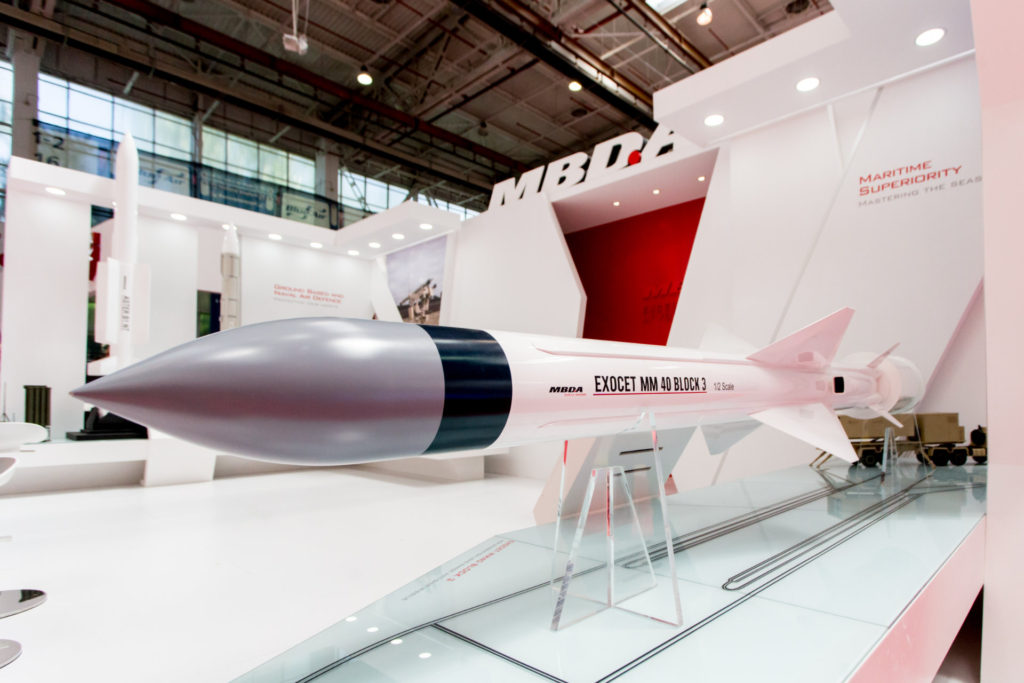
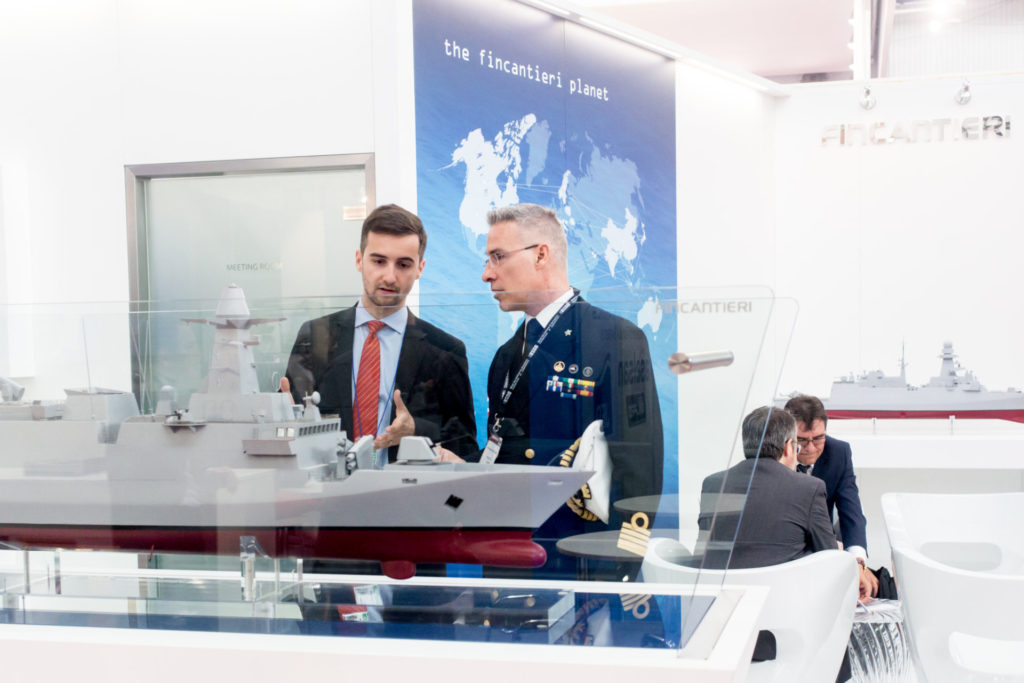
Links Associates assisted its clients, four important players in the defence industry: Airbus, Fincantieri, MBDA, and Thales.

BSDA2018-4718
BSDA2018-4555
BSDA2018-4114
BSDA2018-4060
BSDA2018-3532
BSDA2018-3309
BSDA2018-3277
BSDA2018-3016
BSDA2018-2753
BSDA2018-2742
BSDA2018-2578
BSDA2018-2572

Media Now Least-Trusted Institution Globally

The 2018 Edelman Trust Barometer reveals that trust in the U.S. has suffered the largest-ever-recorded drop in the survey’s history among the general population. Trust among the general population fell nine points to 43, placing it in the lower quarter of the 28-country Trust Index. Trust among the informed public in the U.S. imploded, plunging 23 points to 45, making it now the lowest of the 28 countries surveyed, below Russia and South Africa.

The collapse of trust in the U.S. is driven by a staggering lack of faith in government, which fell 14 points to 33 percent among the general population, and 30 points to 33 percent among the informed public. The remaining institutions of business, media and NGOs also experienced declines of 10 to 20 points. These decreases have all but eliminated last year’s 21-point trust gap between the general population and informed public in the U.S.

“The United States is enduring an unprecedented crisis of trust,” said Richard Edelman, president and CEO of Edelman. “This is the first time that a massive drop in trust has not been linked to a pressing economic issue or catastrophe like the Fukushima nuclear disaster. In fact, it’s the ultimate irony that it’s happening at a time of prosperity, with the stock market and employment rates in the U.S. at record highs. The root cause of this fall is the lack of objective facts and rational discourse.”

Conversely, China finds itself atop the Trust Index for both the general population (74) and the informed public (83). Institutions within China saw significant increases in trust led by government, which jumped eight points to 84 percent among the general population, and three points to 89 percent within the informed public. Joining China at the top of the Trust Index are India, Indonesia UAE and Singapore.

For the first time media is the least trusted institution globally. In 22 of the 28 countries surveyed it is now distrusted. The demise of confidence in the Fourth Estate is driven primarily by a significant drop in trust in platforms, notably search engines and social media. Sixty-three percent of respondents say they do not know how to tell good journalism from rumor or falsehoods or if a piece of news was produced by a respected media organization. The lack of faith in media has also led to an inability to identify the truth (59 percent), trust government leaders (56 percent) and trust business (42 percent).

This year saw a revival of faith in experts and decline in peers. Technical (63 percent) and academic (61 percent) experts distanced themselves as the most credible spokesperson from “a person like yourself,” which dropped six points to an all-time low of 54 percent.

“In a world where facts are under siege, credentialed sources are proving more important than ever,” said Stephen Kehoe, Global chair, Reputation. “There are credibility problems for both platforms and sources. People’s trust in them is collapsing, leaving a vacuum and an opportunity for bona fide experts to fill.”

Business is now expected to be an agent of change. The employer is the new safe house in global governance, with 72 percent of respondents saying that they trust their own company. And 64 percent believe a company can take actions that both increase profits and improve economic and social conditions in the community where it operates.

This past year saw CEO credibility rise sharply by seven points to 44 percent after a number of high-profile business leaders voiced their positions on the issues of the day. Nearly two-thirds of respondents say they want CEOs to take the lead on policy change instead of waiting for government, which now ranks significantly below business in trust in 20 markets. This show of faith comes with new expectations; building trust (69 percent) is now the No. 1 job for CEOs, surpassing producing high-quality products and services (68 percent).

“Silence is a tax on the truth,” said Edelman. “Trust is only going to be regained when the truth moves back to center stage. Institutions must answer the public’s call for providing factually accurate, timely information and joining the public debate. Media cannot do it alone because of political and financial constraints. Every institution must contribute to the education of the populace.”

Other key findings from the 2018 Edelman Trust Barometer include:

  • Technology (75 percent) remains the most trusted industry sector followed by Education (70 percent), professional services (68 percent) and transportation (67 percent). Financial services (54 percent) was once again the least trusted sector along with consumer packaged goods (60 percent) and automotive (62 percent).
  • Companies headquartered in Canada (68 percent), Switzerland (66 percent), Sweden (65 percent) and Australia (63 percent) are most trusted. The least trusted country brands are Mexico (32 percent), India (32 percent), Brazil (34 percent) and China (36 percent). Trust in brand U.S. (50 percent) dropped five points, the biggest decline of the countries surveyed.
  • Nearly seven in 10 respondents worry about fake news and false information being used as a weapon.
  • Exactly half of those surveyed indicate that they interact with mainstream media less than once a week, while 25 percent said they read no media at all because it is too upsetting. And the majority of respondents believe that news organizations are overly focused on attracting large audiences (66 percent), breaking news (65 percent) and politics (59 percent).
  • « Go to Previous Page
  • Page 1
  • Interim pages omitted …
  • Page 5
  • Page 6
  • Page 7
  • Page 8
  • Page 9
  • Go to Next Page »

Newsroom

Ghid de comunicare de criză pentru instituții publice

În pandemie, companiile pot răspunde mai rapid și mai eficient decât guvernele

Implicarea companiilor în lupta împotriva Covid-19

Links Associates

  • About us
  • Vision
  • Industries
  • Expertise
  • GDPR
  • GDPR RO

What we do

  • Public Affairs
  • Corporate Communications
  • Crisis and Reputation Management
  • Consumer PR
  • Media relations
  • Events Management
  • CSR
  • Investor Relations

Link with us

  • LinkedIn
  • Facebook
  • Contact
© 2000–2026 Links Associates. Toate drepturile rezervate.
developed by tooShark